

The drafting industry is transforming at an unprecedented pace, with new technologies and expectations reshaping every aspect of the profession. By 2026, a drafter will need to master a fresh set of essential skills to remain competitive. This article highlights the seven most important abilities, from advanced technical know-how to digital fluency and effective communication. Whether you are just starting or already experienced, discover actionable strategies to secure your place in a rapidly changing, technology-driven market.
Quick answer: By 2026, drafters must master advanced technical skills, digital fluency, and effective communication to remain competitive in a rapidly evolving, technology-driven industry. Key areas include proficiency with AI-powered drafting tools, Building Information Modelling (BIM), 3D modelling, and cloud-based platforms like Autodesk Revit and Inventor, reflecting a shift towards software-savvy professionals.
The Changing Landscape of Drafting in 2026
The world of drafting is transforming at a rapid pace, introducing new tools, workflows, and expectations. By 2026, the drafter’s role will be shaped by evolving technologies, shifting industry demands, and the need for adaptability. Staying informed is vital, and resources like the Drafting industry insights blog offer valuable updates for professionals looking to stay ahead.

Technological Advancements
Technology is redefining the drafter’s daily workflow. The adoption of AI-powered drafting tools is streamlining repetitive tasks, freeing up time for creative problem-solving. Building Information Modelling (BIM) and 3D modelling are now standard, enabling greater accuracy and collaboration. Cloud-based platforms allow teams to work together from anywhere, in real time. Australian firms increasingly use Autodesk Revit and Inventor for complex projects, reflecting the growing demand for software-savvy drafters. Job listings now regularly specify digital proficiency as a core requirement, highlighting the need for continual upskilling to remain competitive in the field.
Evolving Industry Demands
Industry expectations for the drafter are shifting in response to broader trends. Sustainability and compliance with green building standards are now essential. Multi-disciplinary projects are on the rise, requiring cross-functional skills and the ability to collaborate with architects, engineers, and clients. Faster project turnarounds and higher accuracy are expected as standard. In Australia, over 883 drafter jobs are currently listed, demonstrating the diversity of roles and the need for professionals who can adapt to a wide variety of requirements. The drafter’s responsibilities now extend well beyond traditional drafting.
The Importance of Adaptability
Adaptability is emerging as a defining trait for the modern drafter. With frequent changes in regulations and evolving client expectations, professionals must quickly adjust their approach to stay compliant and deliver value. Flexible work arrangements, including remote, hybrid, and on-site roles, are now commonplace. Many companies offer both on-site and remote drafting positions, allowing drafters to choose what suits their lifestyle best. Job descriptions consistently highlight adaptability as a top soft skill, recognising its importance in navigating a dynamic industry landscape.
Key Opportunities for Career Growth
The drafter profession is full of opportunities for those willing to upskill and specialise. Demand is strong across architectural, engineering, and industrial sectors, with roles ranging from junior to senior levels. Leadership, mentoring, and specialisation pathways are increasingly available, allowing drafters to carve out unique career trajectories. Positions for cadet, junior, and senior drafters often come with clear growth pathways and structured training programs. Upskilling not only leads to higher pay and job security, but also ensures that every drafter remains indispensable as industry needs continue to evolve.
7 Essential Skills Every Drafter Needs in 2026
To thrive in the rapidly changing drafting industry, a drafter must cultivate a robust skill set that reflects both current and future demands. The following seven skills are essential for anyone seeking to build a resilient and rewarding career as a drafter in 2026.
1. Advanced Digital Drafting Proficiency
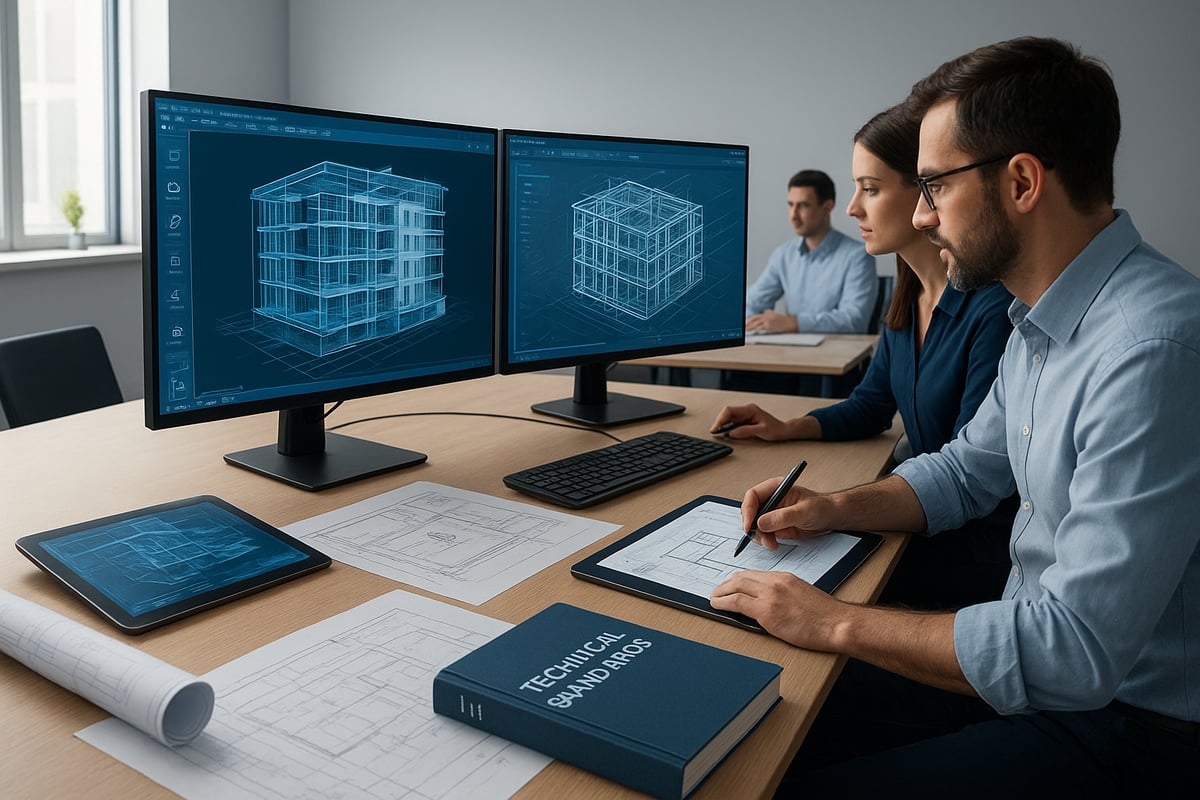
In 2026, digital proficiency is the cornerstone of every successful drafter’s toolkit. Mastery of industry-standard CAD software, such as AutoCAD, Revit, and Inventor, is no longer optional. The ability to produce accurate 2D and 3D models, navigate BIM workflows, and integrate complex data sets defines a drafter’s technical edge.
Australian firms are leading the way, using platforms like Autodesk Revit and Inventor for intricate architectural and engineering projects. Job ads increasingly require experience with tools like Autodesk and Tekla, highlighting the growing expectation for digital fluency.
A drafter must also adapt quickly to new digital tools. Software updates and emerging technologies, including AI-powered drafting assistants, are transforming workflows. Pursuing hands-on training and certifications, such as those in AutoCAD and BIM, significantly boosts employability.
According to industry data, digital proficiency is now a core requirement in the majority of engineering and architectural drafting roles. The ability to move seamlessly between software platforms, understand BIM data integration, and collaborate using cloud-based tools is crucial.
For those looking ahead, understanding future trends is vital. As highlighted in the Future of Architecture in 2026, BIM and AI advancements are reshaping expectations, making continuous digital upskilling essential for every drafter.
2. Strong Technical Understanding of Building Codes and Standards
A drafter’s work is only as strong as their understanding of building codes and standards. In Australia, deep knowledge of the National Construction Code (NCC), local regulations, and compliance requirements is non-negotiable. Drafters must interpret zoning restrictions, permit processes, and ensure every design meets safety, accessibility, and sustainability benchmarks.
For example, TJR Projects places a strong emphasis on compliance and precision in every project, reflecting the industry-wide expectation for accuracy. Errors in code compliance can lead to costly delays or even project cancellations, underscoring the drafter’s responsibility.
Staying current is critical. Building regulations evolve, and a drafter must continuously update their knowledge. The ability to translate complex legal requirements into practical design solutions is a valued skill.
Industry data shows that compliance and accuracy are mentioned in 90% of drafting job descriptions. Drafters who demonstrate a proactive approach to learning and applying new standards position themselves as indispensable team members.
3. Effective Communication and Collaboration Skills
Technical skills alone are not enough for a drafter to succeed. Effective communication and collaboration are equally vital. Drafters must document and annotate drawings clearly, ensuring that engineers, architects, and clients can interpret their work without confusion.
Participating actively in multi-disciplinary teams is common. A drafter often works alongside professionals from various fields, requiring the ability to present complex concepts in accessible language. Digital collaboration platforms, such as BIM 360, are becoming standard, supporting remote and hybrid work environments.
Draftsperson roles consistently highlight the importance of teamwork and client communication. Providing and receiving constructive feedback is part of the daily workflow, helping to refine designs and improve outcomes.
Communication skills are a top requirement in both job ads and workplace success stories. Drafters who excel in this area not only improve project outcomes but also advance more quickly within their organisations.
4. Problem-Solving and Critical Thinking
A drafter’s value is often measured by their ability to solve problems before they escalate. Analysing design challenges, anticipating construction issues, and developing practical solutions are daily tasks. In the drafting phase, addressing potential obstacles can save significant time and resources.
For instance, engineering drafters at Geographe Enterprises are tasked with devising creative, modern solutions to complex technical problems. Applying logic to optimise material usage and reduce costs is another critical aspect of the role.
Evaluating multiple design options and selecting the best approach requires both experience and critical thinking. According to employer surveys, 80% value problem-solving and critical thinking when selecting candidates.
Drafters who can demonstrate these abilities stand out as high performers, capable of delivering innovative solutions and adding substantial value to every project.
5. Attention to Detail and Quality Assurance
Precision is at the heart of a drafter’s role. Producing error-free, detailed drawings ensures that projects proceed smoothly without costly mistakes. Quality assurance processes, including peer reviews and systematic checks, are standard practice in leading firms.
In Perth, for example, building draftee quality checker roles focus specifically on maintaining high standards across all documentation. Adhering to company and industry drafting standards is essential for consistency and reliability.
Meticulous annotation and dimensioning practices further reduce the risk of miscommunication. Quality assurance is not just about avoiding errors—it is about ensuring client satisfaction and project success.
Accuracy is consistently cited as a top performance metric for drafters. Those who develop strong attention to detail are trusted with more complex and high-value projects.
6. Adaptability and Willingness to Learn
The drafting profession is evolving rapidly, and a drafter must be adaptable to stay relevant. Embracing new technologies, software platforms, and industry practices is a sign of professional maturity.
Cadet and junior drafter roles often emphasise mentorship and ongoing training, reflecting the importance of continuous development. Flexibility to work on various project types and adapt to changing client needs is highly valued.
Learning from feedback and project outcomes helps a drafter improve with each assignment. Lifelong learning is now a necessity, not a luxury, for career growth.
Data shows that 67% of employers prioritise candidates who show initiative and a willingness to learn. Drafters who invest in upskilling and adapt to industry changes secure better opportunities and job security.
7. Project Management and Time Management
Finally, effective project management and time management are indispensable for a drafter. Planning and prioritising tasks, coordinating with stakeholders, and managing workflows are all part of the job.
In growing companies, drafters are increasingly taking on leadership and project coordination roles. Tracking project milestones, balancing accuracy with efficiency, and ensuring deadlines are met all contribute to higher productivity and job satisfaction.
A drafter who excels in time management can handle multiple projects simultaneously without compromising quality. These skills are frequently listed in job requirements, reflecting their importance in today’s fast-paced industry.
By mastering these seven essential skills, every drafter positions themselves for long-term success and advancement in a rapidly evolving field.
Career Pathways and Professional Development for Drafters
The drafting profession in Australia offers a wide range of career pathways. Whether you are just starting as a drafter or looking to progress, understanding the available options and professional development opportunities is essential for long-term success.
Entry Points and Progression
Starting as a cadet or junior drafter provides exposure to real-world projects and valuable mentorship. Many companies in Australia, such as Capral Limited and Plexxcon, offer structured training programs that support career growth. A drafter can progress from entry-level positions to senior roles, including team leader or project coordinator.
On-the-job learning, combined with guidance from experienced professionals, helps drafters build technical and soft skills over time. According to recent data, there are over 150 cadet drafter positions available, signalling strong entry opportunities. The evolving responsibilities of a drafter are further explored in the building designer role overview, which highlights clear pathways for advancement.
Certifications, Training, and Upskilling
Formal education is crucial for a drafter aiming to excel in the field. Completing a TAFE course, university degree, or industry-recognised certification in drafting or design lays a strong foundation. Continuing professional development, such as learning new CAD software or enrolling in BIM courses, ensures a drafter remains competitive.
Employers increasingly value certifications in tools like AutoCAD, Revit, and BIM. Many organisations provide structured pathways for upskilling, supporting drafters to pursue advanced qualifications. These credentials not only boost employability but also open doors to specialised roles in drafting.
Industry Associations and Networking
Joining professional industry bodies offers drafters access to a wealth of resources and networking opportunities. Associations such as the BDAA, Design Matters, VBA, and RBP connect drafters with peers, industry leaders, and potential employers.
Membership often includes invitations to workshops, seminars, and exclusive industry events. Networking can lead to collaborations, job offers, or mentorship relationships. Companies like TJR Projects maintain affiliations with leading organisations, demonstrating the value of being an active participant in the drafting community.
Salary Expectations and Job Outlook
Salaries for drafters in Australia vary by experience, specialisation, and location. Typical earnings range from $40,000 for entry-level positions to over $150,000 for senior or specialised roles. The following table summarises common salary brackets:
| Drafter Level | Salary Range |
|---|---|
| Cadet/Junior Drafter | $40K–$60K |
| Intermediate Drafter | $60K–$90K |
| Senior Drafter | $90K–$150K+ |
With more than 880 drafter jobs currently listed, demand remains strong, especially in construction and engineering. Upskilling and specialising allow a drafter to command higher salaries and secure long-term job stability.
Future Trends Impacting the Drafting Profession
The drafting industry is poised for significant transformation as we approach 2026. From automation to sustainability, drafters must stay alert to the trends shaping their profession. Let us explore the four most critical developments influencing the daily work and long-term prospects of every drafter.
Automation and Artificial Intelligence
Automation and artificial intelligence are rapidly changing how drafters approach their tasks. AI now handles repetitive drafting processes, allowing professionals to focus on creative and value-added work. For example, some Australian firms are leveraging AI-powered design software to streamline documentation and minimise human error.
This shift is not just theoretical, as the adoption of smart tools is already evident across the industry. The impact of AI on design and drafting is significant, as detailed in AI’s Impact on 3D Art in 2026. For the modern drafter, adaptability to these technologies is essential to remain competitive.
Sustainability and Green Design
The drafter's role is expanding to include a strong focus on sustainability. Green building standards and environmentally responsible design are becoming core requirements in projects across Australia. Drafters are expected to integrate sustainable materials, energy-efficient systems, and eco-friendly designs into their plans.
Clients and employers now prioritise these skills, as seen in job ads demanding experience with sustainable practices. The move towards greener construction is not just a trend but a long-term shift. Drafters who understand and implement green solutions will be in higher demand and drive positive industry change.
Remote and Flexible Work Arrangements
Remote and flexible work arrangements are now common for the modern drafter. Digital collaboration tools, such as cloud-based platforms, enable teams to work seamlessly from different locations. This flexibility supports a better work-life balance while increasing access to talent across Australia.
Companies in cities like Perth and Brisbane are actively offering hybrid and remote positions. For the drafter, being comfortable with digital workflows and remote communication is now a must. Embracing these arrangements helps professionals remain agile and productive in a changing landscape.
The Evolving Role of the Drafter
The drafter's responsibilities are evolving, moving beyond technical drawing to include project coordination and client liaison. Senior drafters are increasingly leading teams, mentoring junior staff, and contributing to strategic decision-making.
This shift means a drafter must develop leadership and communication skills, not just technical expertise. Taking on broader roles opens up new career pathways and enhances job satisfaction. As expectations grow, the drafter who adapts will remain indispensable to their organisation.
As you look ahead to 2026, it’s clear that mastering these seven essential skills will set you apart in the ever-evolving drafting industry. Whether you’re an experienced professional or just starting out, staying ahead means combining technical expertise with adaptability and strong communication. At TJR Projects, we’re passionate about helping you turn your vision into reality with tailored, high quality drafting solutions and a commitment to compliance and precision. If you’re ready to take the next step on your drafting journey or have a project in mind, let’s connect—Request an Initial Consultation and see how we can bring your ideas to life.